
A day in the life of a farm animal pathologist
As I sit down to write this before the day explodes, I overhear the Donegal accent of the first farmer arriving at post-mortem reception. He’s brought a sheep, wrapped in canvas, after a 3-hour journey from North Donegal. He struggles to recall vaccination dates, mentions there are “others not right”, and wonders how long results will take. His case feels familiar, yet I can’t help hoping it turns out to be something unusual – louping ill, or another nervous disease that might yield good histology or PCR material. And so, the day begins. It’s Easter week, peak lambing and calving season in the west of Ireland. Animals are dying, and everyone wants answers.
I work at Sligo Regional Veterinary Laboratory, 1 of 6 run by the Department of Agriculture, Food and the Marine. My title is Senior Research Officer and Veterinary Pathologist, but most days I’m a laboratory manager who still does pathology. With a team of 18 – vets, scientists, office staff and attendants – our core purpose is farm animal disease surveillance and investigation on behalf of the Irish Government. We are the frontline for exotic, emerging, endemic and zoonotic diseases, and for safeguarding food production. Around 4,000 post mortems come through our doors each year, and spring is so busy we spend the rest of the year catching up.
We operate mainly through passive surveillance, relying on farmers and vets to bring us cases. The better our service, the more submissions arrive and the more our resources are stretched. My constant fear is missing the important case among the routine. We triage as best we can – some post mortems are brief, focused only on cause of death, while others deserve slowing down to capture every detail. Internationally, there’s no magic solution: surveillance is always about sifting through the usual to spot the unusual.
Technology helps. PCR testing now allows us to screen bovine and ovine fetuses quickly for a range of pathogens, sparing us endless slides. Yet results still need context – finding or not finding an agent is meaningless without pathology to prove it fits the lesions. Curiosity remains at the heart of the job, pulling at threads until the story makes sense. That’s where pathology training and FRCPath discipline carry me. They give me confidence to interpret findings safely, even when certainty isn’t possible.
Collaboration is essential too. Cameras and remote meetings help us review cases together, but they don’t replace working side by side, reading a colleague’s raised eyebrow as you float a theory. Pride lies in holding every case to a standard, even on frantic days. Reports may never be neat and confirmatory tests aren’t always possible, but my words are the only record of my contribution. As I am an FRCPath pathologist, they matter.
We are fortunate to have discretion to pursue interesting cases, but with that comes guilt, many slides, so many opportunities and never enough time for research, publications or training others. Still, the Donegal farmer travelled 3 hours to let us examine his sheep. He wants answers. That, at least, I can give him. Maybe that’s enough for today.
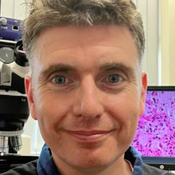
Shane McGettrick
Read next

Author