National Undergraduate Pathology Conference – Pathology and Technology
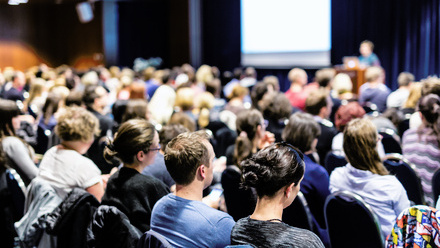
Now in its second year, this conference brought together over 100 students and foundation doctors from across the UK for a day of talks, workshops and poster presentations. The event sought to connect like-minded individuals and increase their interest in, and awareness of, pathology.
The reduction in pathology teaching in medical school curricula has left students with little exposure to the specialty. This conference sought to break the stereotype that pathology is simply ‘looking down a microscope all day,’ and show that the field offers a breadth of specialties – ranging from virology to haematology to neuropathology – with extensive opportunities in academia, research, clinical practice and even humanitarian work.
This year’s theme: Pathology and Technology
Technological advances are rapidly transforming clinical practice and research. Pathology, which underpins diagnostics and understanding of disease mechanisms, is arguably at the forefront of this change. Our event highlighted recent developments in technology and AI, exploring how these are reshaping the future of pathology, whilst certainly not replacing pathologists.Talks
Our morning programme explored different specialties through the lens of this year’s theme:
- Neuropathology of epilepsy – Professor Maria Thom
- Genomics in pathology – Professor Louise Jones
- AI & histopathology – Dr Oliver Shutkever
- Haematology – Dr Karen Breen.
Poster presentations
The lunch break featured 18 poster presentations from students and resident doctors, facilitating insightful discussions and networking. Our winners Oscar Chen and Hitesh Muthyala presented the poster ‘Diagnostic accuracy and workflow evidence for AI in digital histopathology: A systematic review and meta-analysis.’
We extend our thanks to our judges, Dr Oliver Shutkever and Dr Saba Vakili, for their time and expertise.
Workshops
Attendees chose 3 to 4 workshops for the afternoon period, exploring pathology beyond the medical school curriculum. Sessions included:
- Prion diseases – Professor Zane Jaunmuktane
- Forensic toxicology – Hassan Kurimbokus
- Clinical cases – Dr Matilde Clode Freitas, AMBOSS
- Digital pathology – Dr Alistair ‘Ted’ Heath
- Antimicrobial resistance in humanitarian settings – Dr Mohamad Khalife, Médecins Sans Frontières
- Blood films – Dr Vishal Jayakar
- Ethical debate on cadaveric dissection – Dr Charlotte Freer-Smith
- Breast and urological pathology – Dr Wen Ng
- From specimen to slide – Dr Saba Vakili.
Keynote lecture
We welcomed Professor Meagan Chambers from Stanford University, who delivered the keynote lecture ‘Inside the quiet room: Death, truth and the practice of medicine.’ Professor Chambers explored autopsy pathology and the phenomenology of death, asking ‘How do we die?’
She likened autopsy to storytelling, noting that the cause-of-death story is just 1 chapter of a person’s life story; their medical history and their loved ones tell the rest of the story, and the autopsy pathologist weaves these 3 threads together.
We are grateful to our speakers and workshop leads for their contributions and valuable insights. Additionally, we thank our sponsors – the Pathological Society and the Medical Defence Union – for their financial support, and the Royal College of Pathologists for providing promotional materials and helping advertise our event.
Zainab Shafiq
Read next
Author