
Launch of the statutory medical examiner system in England and Wales
Welcome
The College has campaigned for the introduction of medical examiners for over 15 years and has worked with successive governments and ministers to support implementation of the system. The College has trained over 3,000 medical examiners and officers, ensuring that there are enough trained individuals to deliver the statutory medical examiner service, in which a death cannot be registered without coroner or medical examiner review.
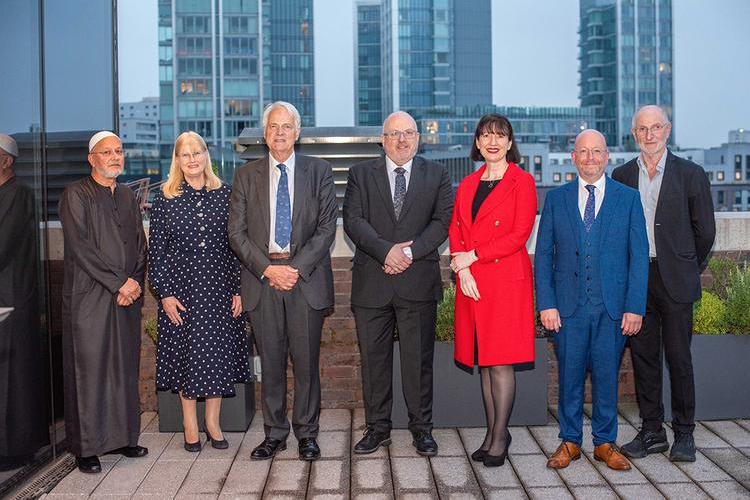
To mark the launch of the statutory medical examiner system in England and Wales, the College hosted a special event. Dr Bernie Croal, President of the College, welcomed guests to the event and thanked everyone involved in the development of the new system.
Dr Suzy Lishman, the College’s Senior Advisor on Medical Examiners, paid tribute to everyone who contributed to setting up the medical examiner system, including the civil servants of several government departments, the National Medical Examiner, the College’s Medical Examiners Committee, training facilitators and particularly the representatives of patient and faith communities, for their support of medical examiner training.
National Medical Examiner
Dr Alan Fletcher, the National Medical Examiner, highlighted the progress that was made in the non-statutory system and thanked the many stakeholders involved. Dr Fletcher said, “It is fitting that this event is held at the Royal College of Pathologists, as the lead college for medical examiners and medical examiner officers, because their continued excellent support over many years has been instrumental in achieving readiness for the statutory system.
"My special thanks to Dr Suzy Lishman, whose support has been fantastic and I believe we would not be where we are now without her leadership for training and more.
“The golden thread that runs through this system is that bereaved people are at the centre of it. There is a risk this has become a cliché, but for medical examiners and officers, getting it right for bereaved people really is at the centre. The benefits in accurate coroner referral and detection of patient safety concerns are clear.
“We now have over 2,700 senior doctors trained as medical examiners and over 750 people trained as medical examiner officers. We are currently scrutinising over 80% of all eligible deaths and have scrutinised over 1 million deaths in the non-statutory phase.”Faith communities
Mohamed Omer MBE, representing the National Burial Council and Gardens of Peace Muslim Cemetery, spoke on behalf of the Muslim community. He welcomed the reforms, particularly the care taken by medical examiner offices to meet the needs of faith communities by minimising delays to funerals. Mr Omer has spoken at almost every medical examiner and officer training day, ensuring that everyone working in the service understands the importance of working with local faith communities.
Mr Omer said, “The medical examiner system ensures the bereaved families are at the heart of it. We are grateful that the new system takes into account faith requirements to allow for quick burials. To include faith requirements as part of the training programme for both medical examiners and medical examiner officers demonstrated the commitment by the National Medical Examiner team to be sensitive of bereaved families’ needs.”
Professor David Katz FRCPath spoke on behalf of the Board of Deputies of British Jews who have also contributed to medical examiner training. He said that “cultural competencies are important, since these issues rank very highly as Jewish religious freedoms required from host societies.
“Jewish principles – investigating how and why death occurs to learn lessons that help to prevent future illness and possibly death, and supporting bereaved families – are shared major objectives between Jews and medical examiners; hence, 9 September 2024 is an important milestone.”
Royal College of General Practitioners
Although the College is the lead college for medical examiners, it has worked closely with other medical royal colleges and faculties to develop training and ensure that consideration is given to the impact of the reforms on all doctors. The Royal College of General Practitioners (RCGP) has been particularly supportive over many years, as a key member of the Medical Examiners Committee. Dr Frances Cranfield spoke on behalf of the RCGP.
“RCGP would like to extend its sincere thanks to the RCPath for all it has done to help and influence the production of a whole new medical specialty and whole new statutory process of scrutiny of death. We are aware of the enormous amount of work and commitment over so many years with standard-setting and most particularly with training.
“We have seen some outstanding leadership during that time. We are very grateful for the inclusivity and respect shown and the training and guidance provided to so many GPs who are now themselves medical examiners. We believe that this does have the potential to make a big difference for the bereaved and that it does have the potential to improve patient safety. Some things are worth believing in and worth working for, so thank you to the RCPath for your part in helping to make this a reality.”
Sir Robert Francis
The final speaker was Sir Robert Francis, who chaired the Mid-Staffordshire inquiry and is former President of The Patients Association and former Chair of Healthwatch England. The introduction of medical examiners was one of the recommendations of the Mid-Staffs report and the one that has taken longest to implement. Sir Robert acknowledged all the work that had gone into preparing for the statutory medical examiner system and welcomed the benefits for the bereaved and learning to improve care for future patients.
Dr Suzy Lishman CBE
Read next