Become a histopathologist
Whenever tissue is taken from a person’s body to be examined, a histopathologist is responsible for examining the sample and returning a diagnosis.
Already at medical school or interested in studying medicine?
Pathologists in the below roles begin their careers as medically qualified doctors, then go on to specialise in a particular area of diagnosis. Read more about their work environments, skills and training pathways.
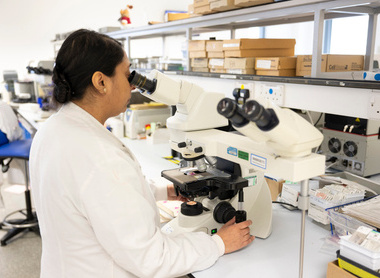
Whenever tissue is taken from a person’s body to be examined, a histopathologist is responsible for examining the sample and returning a diagnosis.
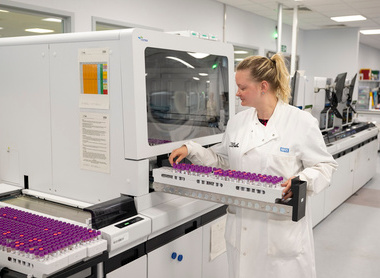
Every 14 minutes in the UK, someone is diagnosed with blood cancer or a related disorder. That’s almost 38,000 people every year. In each and every case, haematologists play a vital role in the patient’s healthcare journey.
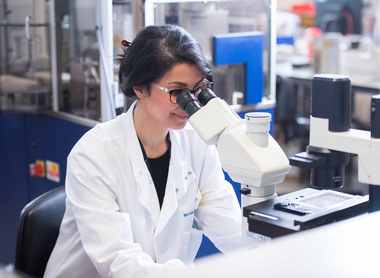
With the seemingly endless growth of superbugs and other antibiotic-resistant bacteria, the analytical and inquisitive minds of medical microbiologists are vital in healthcare today – both for treating infections and for fighting the spread of disease.
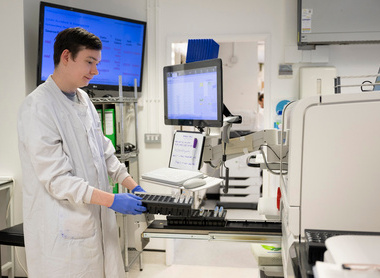
Chemical pathology is a distinct medical specialty for physicians who wish to combine scientific rigour with their skills in direct patient care.
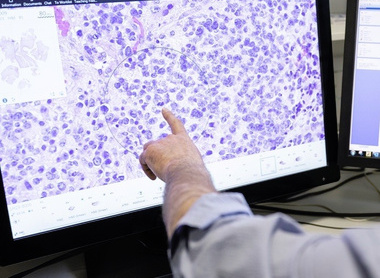
Neuropathology covers the study of diseases in the central (brain and spinal cord) and peripheral nervous systems, and skeletal muscle.
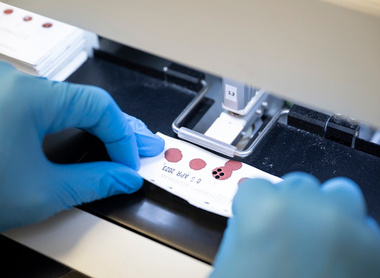
The work of perinatal and paediatric pathologists has a huge effect on families, providing vital information during the most difficult periods of their lives, such as the loss of a baby or diagnosis of a child with cancer.
This lesser-known branch of dentistry – oral and maxillofacial pathology – is all about diagnosing diseases in the head, neck, mouth (oral) or the jaws and face (maxillofacial region).

Forensic pathology is perhaps one of the most well-known pathology specialties – it’s also one of the smallest. Forensic pathologists provide vital expertise in cases where a person has died in suspicious circumstances.
Viruses are some of the most diverse of life forms in the world. This is often reflected in the diversity of those who commit their lives to studying viruses and the very different ways in which they have become interested in the subject.
Only in the 20th century were scientists able to understand that the immune system was the link between Jenner’s 18th century cowpox vaccination and organ transplantation, autoimmunity and allergies. Clinical immunology has since evolved into the branch of medicine concerned with all activities of the body’s defences.
See what it's really like to work as a pathologist. Read our interviews with Dr Arthur, Dr Forde and Dr Jenkins.